
Venezuela - The Operation and Arguments For and Against
The Extraction Of Maduro from a political, strategic and tactical perspective.

Late Friday night, U.S. Special Operations Forces conducted a helicopter assault into Caracas, Venezuela, supported by various manned and unmanned aircraft. As always, I’m here to provide some context around the situation and give you the arguments for and against, so you can make up your own mind. Like I always say, I discuss strategy, not morals. I’m not a philosopher.
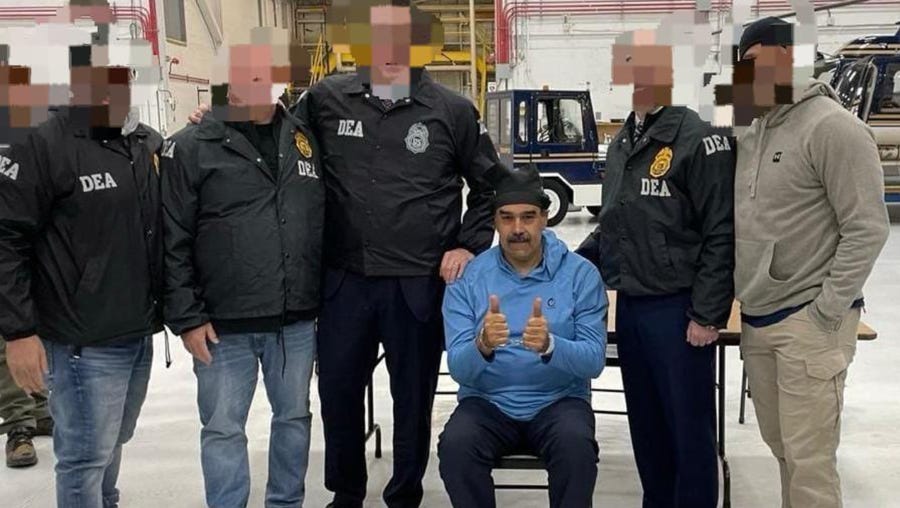
I’m not going too deep into the backstory of the U.S. vs. Venezuela. I already made a YouTube video on the topic (click here).
Phase 1 - Information Warfare
Trump’s war against Maduro started with information warfare, as it should. Before a country takes military action against another, it’s good practice to shape the political environment and get supporters on your side. For example, in 2003, before the U.S. invaded Iraq, they argued that Iraq had weapons of mass destruction. This wasn’t long after the insane 9/11 attack in NYC, so people were more inclined to listen to that kind of rhetoric. Before Russia went to war with Ukraine, they argued it was because of NATO expansion and a whole slew of other reasons. One of the best byproducts of this political move is that people will go on TV and social media to argue for your “cause.”
Trump shaped the political environment for his action against Maduro, but in a way not seen in this era.
His stated reasons are:
Oil, Land, and other assets that Venezuela stole from the U.S.
Narco-terrorism, Human Trafficking, and Murder
Illegal Aliens being sent to the U.S. by Maduro
The stated reasons don’t have to be true, but they do have to be half true. War for oil is not very popular, especially not after the Middle East wars. It was unclear to me why anyone would include that point in their public reasoning. Usually, something like that you keep quiet.
One point they emphasized that seemed to stick was the narco-terrorism angle. The way the Trump team handled this was through a bit of hybrid warfare. Yes, what the Russians are known for (video on that). The U.S. designated various criminal organizations in Venezuela as terrorist groups and claimed that Maduro was their leader. This then allowed the US military to conduct airstrikes on small boats allegedly shipping drugs out of Venezuela. The Trump admin would publish these strikes as part of their information campaign. I doubt these boats had anything to do with Maduro himself, but it doesn’t matter. Like I said, this stuff just has to be half true. Venezuela doesn’t really produce drugs, but it is one of many transshipment routes. Corrupt people in the government are sometimes involved or turn a blind eye. That connection is good enough for propaganda purposes, and the Trump team used it.
I had my doubts this would work, until I started seeing people on Twitter/X and YouTube repeating the talking point: “They’re shipping drugs to the U.S. and killing Americans.” I told myself… ahh… it actually worked.
Phase 2 - Spinning The Block
Now that the information warfare has been going on for a couple of months, the military has been doing tons of rehearsals. U.S. intelligence has been on the ground, creating spies and shaping the environment for military action. It’s time to spin the block.
Part I: Intelligence & Preparation
Pattern of Life: Intelligence teams mapped Maduro’s movements, residence, and personal habits.
Staging: US forces were ready by early December, awaiting a specific window to minimize civilian casualties and maximize tactical surprise.
Information Warfare: US Law enforcement agents are ready to take part in the operation to frame the apprehension as an “arrest” and not a kidnaping.
Holding Pattern: US forces remained at high readiness through the Christmas and New Year period, waiting for a break in adverse weather.
Part II: Infiltration & Suppression (Friday 1/2/2025)
22:46 EST: President issues the “Go” order.
Launch: 150+ aircraft across the Western Hemisphere begin coordinated flight paths.
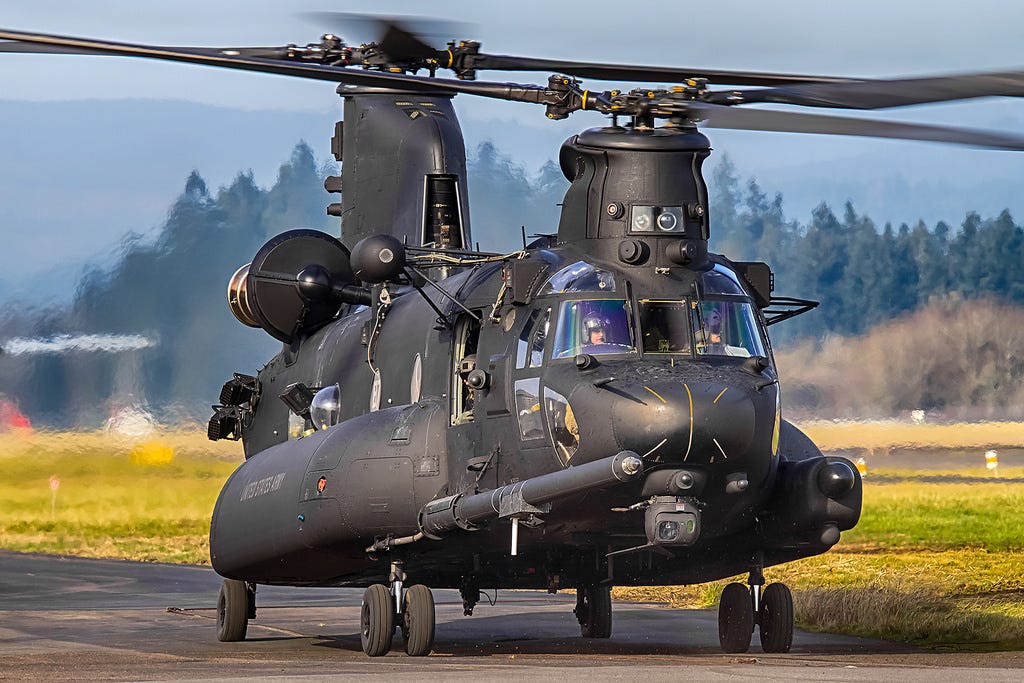
Infiltration: US Special operators and federal agents onboard special helicopters cross into Venezuelan territory at 100 ft above ground level to evade detection.
SEAD Operations: SpaceCom, CyberCom, and Joint Air Components from the US Navy, Marines, and Air Force begin dismantling and disabling Venezuelan air defense systems to clear a corridor for the helicopters.
Part III: The Breach
01:01 EST (02:01 Local): Primary extraction force arrives at Maduro’s compound inside a large Venezuelan military base.
Engagement: Helicopters take initial fire upon arrival; US forces respond with overwhelming force in self-defense. One aircraft sustained damage but remained airworthy.
Apprehension: Ground teams isolate the objective and secured Maduro and his wife with zero US fatalities.
Part IV: Exfiltration & Recovery
Withdrawal: Helicopters extract the ground force under continuous close air support (CAS) and suppressive fire during multiple engagements.
03:29 EST: All US forces clear Venezuelan airspace.
Processing: Maduro and his wife are embarked aboard the USS Iwo Jima for transport.
Regime Change?
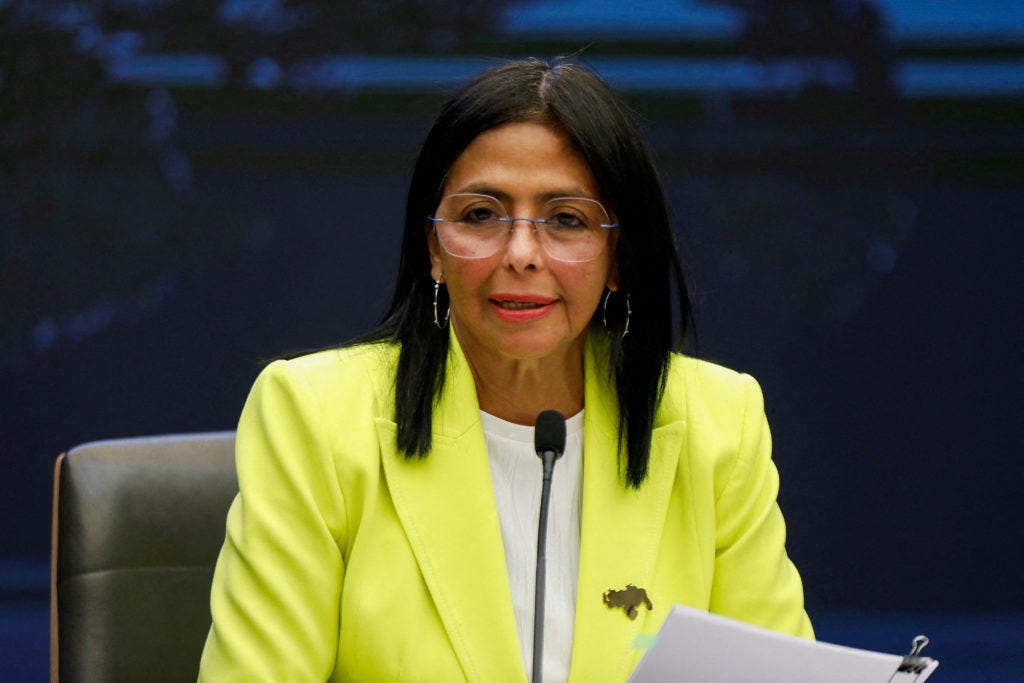
Although Maduro was removed, his regime remains in power, with his vice president Delcy Rodriguez supposedly at the helm. The Venezuelan government is a complex organization with various powerful players controlling different sectors. Removing Maduro doesn’t collapse the regime itself. The Trump administration is keeping U.S. forces on the coast of Venezuela to keep military pressure on the regime.
The Arguments
These are not necessarily my personal feelings, just things to think about when you’re making up your mind.
For
Propaganda and information warfare aside, the positive arguments for what the Trump administration did are that Maduro is an extremely incompetent leader who drove his country into the ground. Removing him could potentially bring Venezuela back to being a rich, thriving country again. The Maduro regime was also friendly with Russia, China, and Cuba. Knocking Venezuela out of that network could have some positive effects for the U.S.
The pro arguments all hinge on the U.S. properly handling the internal politics and economics of Venezuela.
I could talk about the “Big Oil” argument from Trump, but it’s not very good. It’s actually expensive, hard for regular people to understand, not popular, and easily dismantled. We made it easy to understand with a TikTok video we put out though (link).
Against & Questions
Like I said before, the Venezuelan government is a complex organization with various powerful players controlling different sectors. It’s unclear how the U.S. will be able to fully exert control over the country without boots on the ground. Does VP now president Delcy Rodriguez have enough support to keep all these players on her side? US can only kidnap so many people, and there’s the possibility of creating power vacuums that lead to chaos and warring factions. These people are not just going to lay down and give up their money and power.
How will the U.S. secure elections without boots on the ground? If that’s even the goal. Will the U.S. rig these elections like they did in Afghanistan?
What if the people of Venezuela themselves want something that’s against the Trump administration’s interests? For example, what if they want to keep all of their oil nationalized? Does the U.S. order Caracas to kill protestors and rioters too, or…? Is the U.S. going full colonialism or just halfway?
Another argument against is that it puts Europe in a crazy position. Europe is supporting Ukraine against the Russian invasion. The main argument from the Europeans is that Russia’s invasion was illegal and that Putin can’t just take over countries whenever he feels like it. Trump said himself the U.S. is now in charge of Venezuela. Europe needs Trump to support Ukraine, so they’re not speaking out against Trump’s moves and end up looking like complete hypocrites.
This move bolstered Putin’s worldview that one can just take whatever they want if they’re strong enough. At the same time, it exacerbates Putin’s paranoia that this is what “the West” is looking to do to him. The swiftness of the U.S. military operation also highlights the weakness of the Russian military. They’re incapable of removing Zelensky, and that puts internal pressure on Putin. This might force him to start taking drastic measures.
A really complicated mixed bag here.
So many questions, not many answers. As always, thanks for reading.
Let’s go